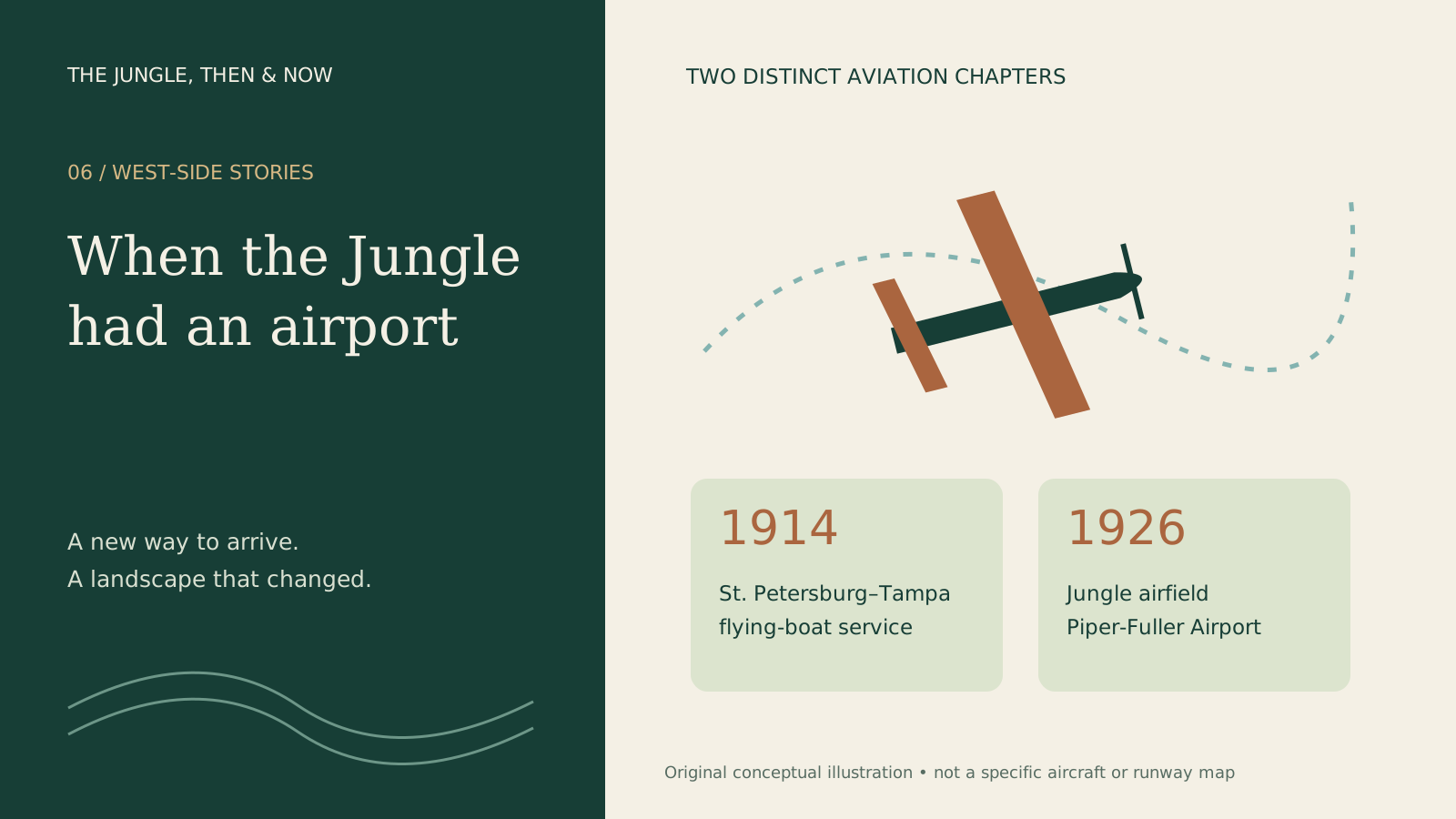
An airport is not the first thing most of us look for in a neighborhood history. Yet aviation belongs to the Jungle’s story, along with the streetcar, shops and hotel.
The St. Petersburg Museum of History preserves a photograph of Piper-Fuller Airport cataloged to about 1928. Its caption identifies a field built by Walter Fuller in 1926, north of 22nd Avenue North. The archive gives the picture a wonderfully unromantic identifier: P05003. Sometimes that is the best beginning for a surprising story.
Sources: Piper-Fuller Airport, photograph P05003, circa 1928
Put it on the right map
Locating the airport is more complicated than pointing at a single present-day property. In a map-based history published by the Jungle Terrace Civic Association, Jack Phillips places the original field west of the old railroad corridor, now followed by the Pinellas Trail. Later expansion reached land associated with today’s Walter Fuller Park.
The footprint changed. So did the surrounding uses. A modern park boundary, a former runway area and the nearby golf course do not automatically describe the same piece of ground.
Phillips also places the Jungle golf course south of 22nd Avenue. That is a useful correction to the easy idea that all the open land around the old resort was one interchangeable expanse.
Looking at the area in stages gives a more interesting picture: land could move from one purpose to another, and each new purpose left a different kind of trace.
Sources: History of Piper-Fuller Airport
Which aviation first?
The museum caption calls Piper-Fuller the city’s first airport. That description should not be confused with St. Petersburg’s celebrated first scheduled airline story.
The St. Petersburg–Tampa Airboat Line began in 1914, more than a decade earlier. The museum’s Flight One Gallery tells that story through the Benoist flying boat, pilot Tony Jannus and the route across Tampa Bay.
A flying-boat service and a later land-based airfield are distinct chapters. Combining them creates an impressive-sounding sentence and a muddled timeline. Keeping them separate shows how many different forms early aviation could take.
For the Jungle, the 1926 field fits a wider pattern of developers pursuing new ways to bring people to the west side. The streetcar had supplied one kind of connection. Flying suggested another.
Sources: Piper-Fuller Airport, photograph P05003, circa 1928 · Flight One Gallery · Walter P. Fuller: Jungle Visionary
What an old photograph can do
The archive photograph is worth opening for its everyday detail: a pilot beside a biplane on a grass field, with automobiles behind. Start with the caption and its approximate date. A single image makes the airfield’s early years tangible.
It also encourages a little patience. A photograph captures one scene at one moment; it does not establish every runway or boundary in the airport’s history. Comparing it with dated maps is a separate, useful step.
The takeaway is still a good neighborhood surprise: early aviation was part of the landscape here. Once you know that, a place that seems entirely familiar becomes a little less obvious, and a lot more interesting.
Sources: Piper-Fuller Airport, photograph P05003, circa 1928
GO A LITTLE DEEPER
FOLLOW THE SOURCES.
Original article by The Jungle. Sources checked . Historical interpretation and uncertainty are identified in the text.
- Piper-Fuller Airport, photograph P05003, circa 1928 St. Petersburg Museum of History Archives
- History of Piper-Fuller Airport Jack Phillips / Jungle Terrace Civic Association
- Flight One Gallery St. Petersburg Museum of History
- Walter P. Fuller: Jungle Visionary The Jungle Country Club History Project
Have a source, memory or correction to add? Send it to our review inbox. A personal recollection may add perspective without settling a disputed fact.