A grocery store and a nightclub sound like different kinds of destinations. In Walter P. Fuller’s Jungle Prado, they belonged to the same plan.
The shopping center at Park Street and Elbow Lane opened in December 1924, according to the newspaper-based research of the Jungle Country Club History Project. The project records a practical mixture of shops, a garage and filling station, a waiting room for streetcar passengers, and the Gangplank nightclub.
It is a wonderfully revealing list. A developing community needs ways to buy necessities and get around. It can also use somewhere to enjoy an evening. Here, the everyday and the glamorous shared an address.
Sources: History of the Jungle Prado Building
A band with a paper trail
The Gangplank’s name survives beyond local reminiscence. Earl Gresh and His Gangplank Orchestra recorded “Help!” for Columbia in 1925. WFMU’s broadcast archive lists the recording by artist, song, label and year, giving a reader several useful anchors for following its trail.
That is a pleasingly concrete connection to the era. A band associated with the Jungle carried its name into the record business. We can follow a surviving recording through an archive rather than rely entirely on a story told years later.
Music offers a different way to think about a historic place. The architecture tells us where people gathered; a recording gives another clue to the entertainment world around them. It cannot tell us who occupied every table, or turn a rumored guest into a documented one.
Sources: WFMU broadcast archive, August 6, 2020: Earl Gresh, Help! (Columbia, 1925) · History of the Jungle Prado Building
Prado, then Prada
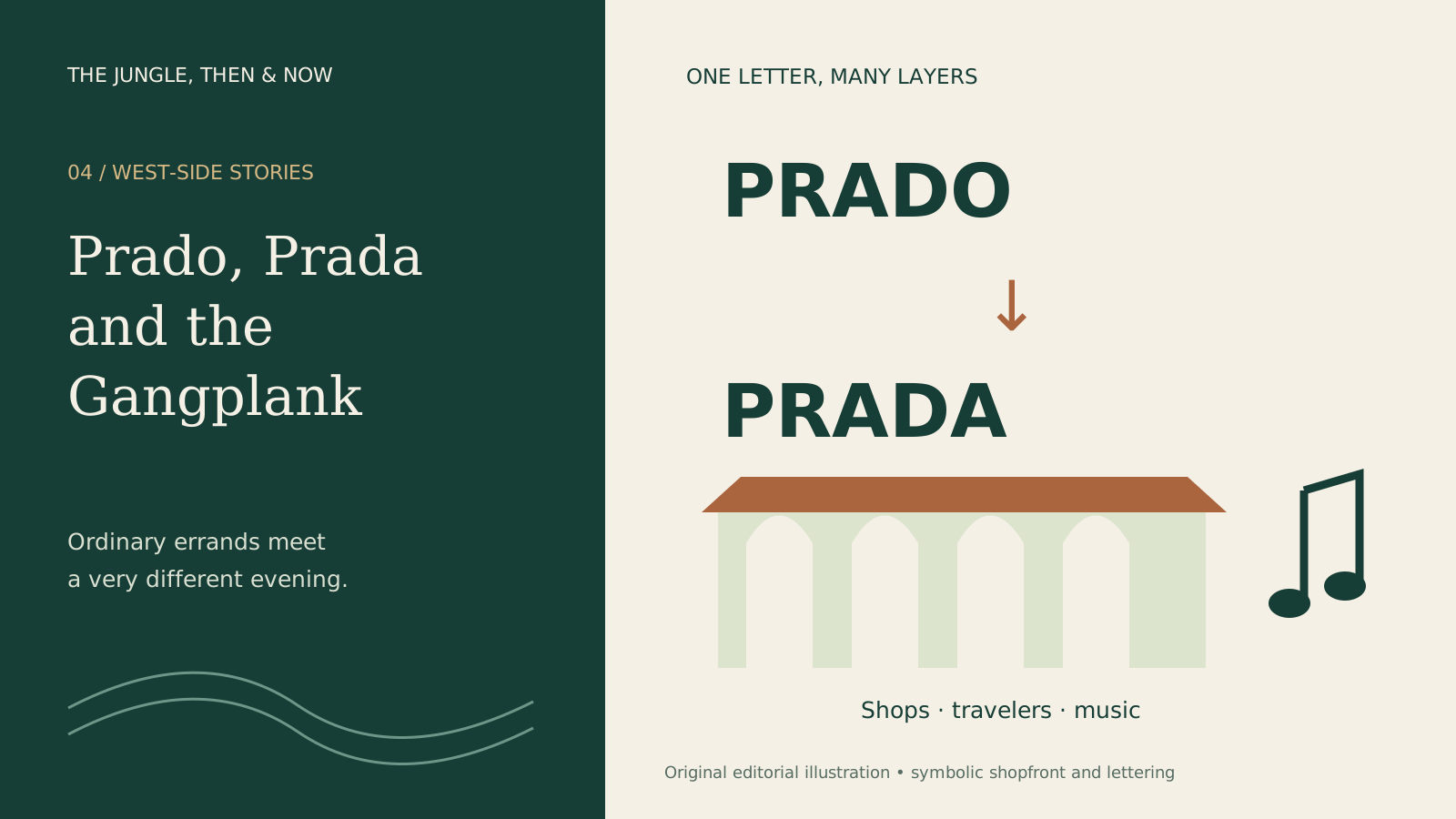
The original name was Prado. Strandberg’s research connects it to Havana’s Prado promenade and traces the later spelling through newspaper advertisements.
After Ottilie Gobel acquired the building in 1940, former shops were converted into apartments. A January 1941 advertisement used Jungle Prada. Yet the older spelling still appeared in the name of a chicken-dinner restaurant later that year. The transition was untidy enough for both names to coexist.
Why did the final letter change? The research does not establish an answer. A deliberate choice and an accident are both possibilities. The ads show usage; they do not supply a motive.
That small uncertainty is part of the charm. Neighborhood names can settle into everyday speech while the reason for a change slips out of reach.
Leave room for the real story
The Gangplank has attracted plenty of famous-name folklore. Claims involving Al Capone and Babe Ruth deserve more care than a casual retelling usually gives them. The local history project rejects the story that Ruth married here and finds no evidence for the often-repeated reception claim.
We do not need an unverified celebrity appearance to make the place interesting. The known combination is lively enough: errands, travelers, live music, changing tenants and a name that evolved.
A neighborhood landmark earns its layers through use. Sometimes the best clue is a grand opening. Sometimes it is a record label. Sometimes it is a very ordinary apartment advertisement.
Sources: History of the Jungle Prado Building
GO A LITTLE DEEPER
FOLLOW THE SOURCES.
Original article by The Jungle. Sources checked . Historical interpretation and uncertainty are identified in the text.
- History of the Jungle Prado Building The Jungle Country Club History Project
- WFMU broadcast archive, August 6, 2020: Earl Gresh, Help! (Columbia, 1925) WFMU
- When Did Jungle Prado Become Jungle Prada? Stev Strandberg, St Pete Wiki
Have a source, memory or correction to add? Send it to our review inbox. A personal recollection may add perspective without settling a disputed fact.