Jungle Prada’s history did not begin with a Spanish landing. Long before the name Narváez appeared on a local marker, people had made a village on this stretch of west St. Petersburg’s waterfront. Keeping part of that landscape intact would eventually become the work of a family, a nonprofit and neighbors willing to help after a storm.
A family’s decision
The family chapter began in 1940. According to Sacred Lands Preservation and Education’s account of its origins, Harold C. “Happy” Anderson and his wife, Frances, bought three acres on Boca Ciega Bay containing two Tocobaga shell mounds. Frances was a horticulturalist; Happy’s interest in the area’s Indigenous history went back to his childhood in St. Petersburg in the 1920s. The organization credits the couple with protecting and tending the property for more than 50 years.
Sources: Sacred Lands’ history
One part of a larger landscape
That three-acre purchase is not the whole Jungle Prada archaeological site. It is the privately maintained part of a larger historic landscape. Sacred Lands describes its property as part of the National Register’s Jungle Prada Site, with a surviving mound and a portion of the village’s raised central plaza. Its account places the Tocobaga village’s occupation at approximately 1000–1600 C.E. For neighbors accustomed to thinking in subdivisions and street names, that is a different scale of local time.
Sources: Sacred Lands’ site description · Before the Jungle Had a Name
The view in 1999
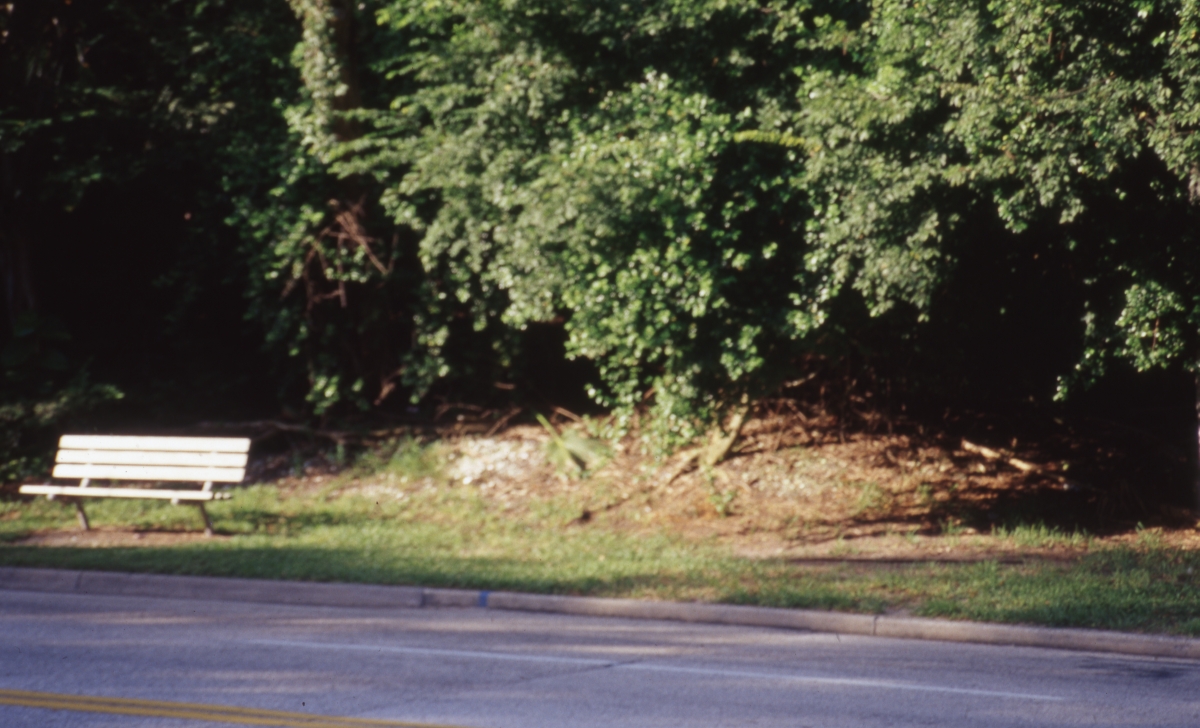
The state’s photographic record offers another way into that older landscape. In 1999, Florida’s Bureau of Historic Preservation documented Jungle Prada in a set of 14 color slides now catalogued by the State Archives. The collection includes views from Park Street, artifacts, a historical marker and an archaeological test-unit profile. The archive describes a substantial Safety Harbor mound-and-midden complex; it cautiously identifies the possibility of a town center that may yield information about intercultural relationships. These are records of a place people inhabited, not simply scenery around a famous explorer’s story.
Sources: State Archives photograph record
Recognition and responsibility
In 2001, Happy and Frances’s son Erik and his wife, Doris, established Sacred Lands Preservation and Education. Two years later, on February 4, 2003, the Jungle Prada Site entered the National Register of Historic Places. The federal record identifies its significance in terms of archaeological information potential. Pinellas County’s listing records both private and local ownership, a reminder that the historic site crosses the boundaries between a public park and a privately cared-for property.
Sources: Sacred Lands’ history · National Park Service · Pinellas County
Neighbors after the storm
Preservation did not end with that recognition. After Hurricane Helene in 2024, more than 30 USF students, faculty, staff and alumni helped at a Sacred Lands cleanup day. The university’s November account describes clearing a museum, carrying away debris and dismantling a displaced dock. The work was practical and physical: a historic place needed people to help it recover.
Sources: USF’s November 2024 report
Saving new memories
By late April 2025, the site was helping preserve a different kind of evidence. USF historian Catherine Wilkins’s Hurricane Histories project recorded its first oral histories there during “Echoes of the Land: Hurricanes, History and Storytelling.” The recordings gathered experiences of the 2024 storms, from rising water to the struggle to rebuild.
Sources: USF’s June 2, 2025 report
The connection is a useful one for the neighborhood: the past survives through more than a marker. It survives when land is cared for, records are kept and people’s experiences are saved before they disappear. At Jungle Prada, that work spans an ancient village, a family’s decision in 1940 and memories still close enough to hurt.
GO A LITTLE DEEPER
FOLLOW THE SOURCES.
Original article by The Jungle. Sources checked . Historical interpretation and uncertainty are identified in the text.
- Sacred Lands’ history
- Sacred Lands’ site description
- State Archives photograph record
- National Park Service
- Pinellas County
- USF’s November 2024 report
- USF’s June 2, 2025 report
- Before the Jungle Had a Name The Jungle — background on the Indigenous village and the disputed landing tradition.
Have a source, memory or correction to add? Send it to our review inbox. A personal recollection may add perspective without settling a disputed fact.