A park can start to feel inevitable once it has been part of everyday life for long enough. There it is: room to walk, play, meet someone, or take a break. The decisions that kept the space available become harder to see.
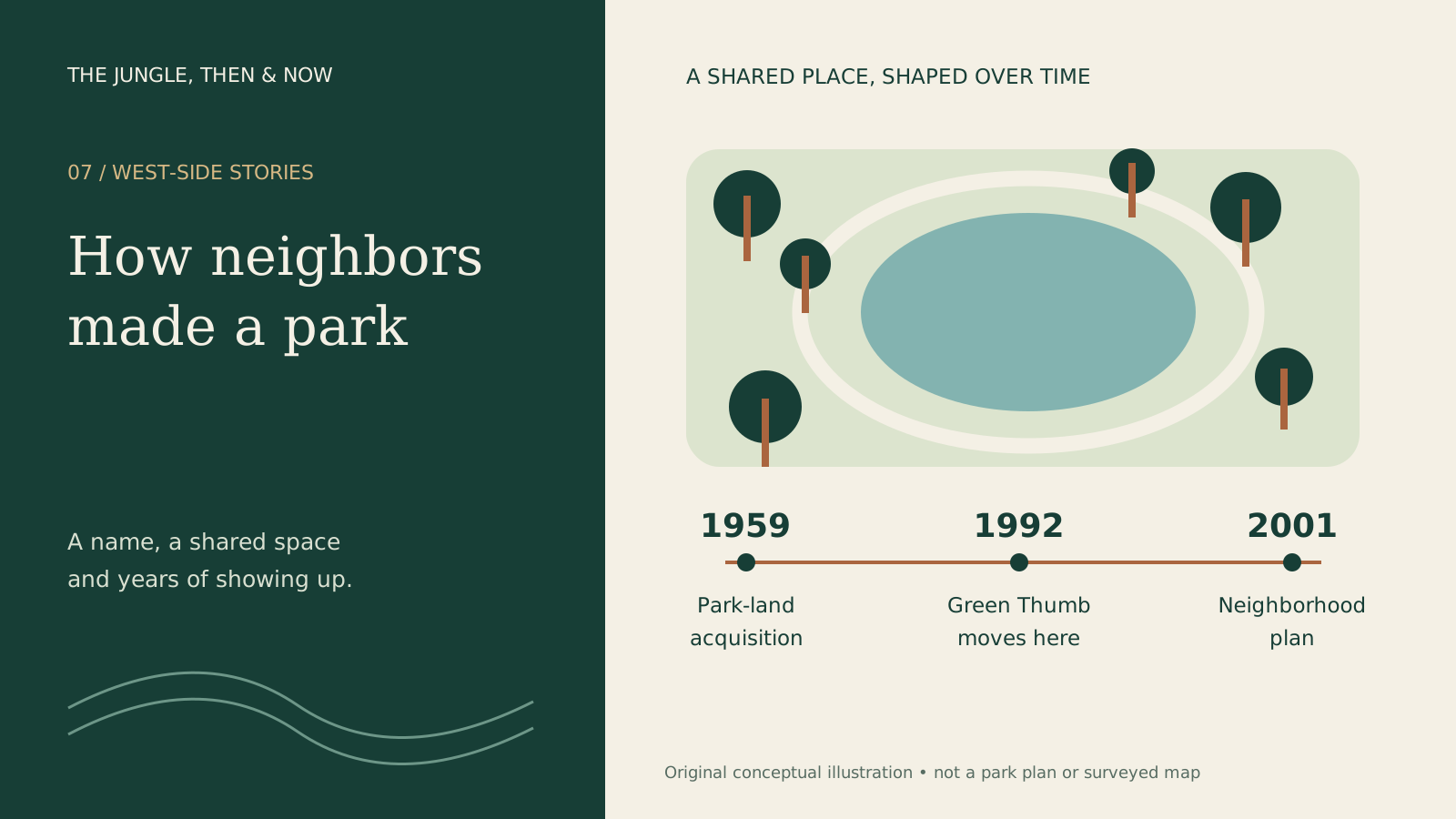
Walter Fuller Park has a community chapter behind that familiar landscape. The city-assisted Jungle Terrace Neighborhood Plan records the city’s acquisition of the park property from the Piper-Fuller Company in 1959. It also credits neighborhood advocacy with helping secure the land’s park use.
Sources: Jungle Terrace Neighborhood Plan (November 2001), pages 3–6 and 8–9
Residents helped choose the future
According to the plan, the Jungle Terrace Civic Association worked with City Council on the park effort. The association, the Council of Neighborhood Associations and the St. Petersburg Times then sponsored a naming contest. The winning suggestion earned a $100 savings bond.
That is a small, human detail in a land-use story. A place that could be discussed as acreage became somewhere residents were invited to name.
The documented 1959 acquisition also reminds us to be careful with a park’s birthday. Buying land, choosing a name, building facilities and opening them can happen at different times. There may be several meaningful anniversaries.
Sources: Jungle Terrace Neighborhood Plan (November 2001), pages 3–6 and 8–9
A public place keeps changing
The city’s current park page lists a recreation center, pool, trails, sports fields, courts and a dog park. Those uses make the park part of many different routines, from organized activity to an ordinary walk.
A place with that many users requires continuing choices. More activity can bring more neighbors together, while quiet space, trees and room to move are valuable too. The park’s history helps explain why residents would care about that balance.
The 2001 neighborhood plan reflects those concerns in its own time. Residents emphasized retaining open space at Walter Fuller Park and preserving the neighborhood’s leafy character. Read as a historical document, it shows people discussing the kind of place they wanted to keep.
Sources: Walter Fuller Park · Jungle Terrace Neighborhood Plan (November 2001), pages 3–6 and 8–9
A tradition takes root
The Green Thumb Festival offers another view of that evolving community life. The Garden Club of St. Petersburg traces the festival’s beginnings to an Arbor Day event at Boyd Hill in 1986 and its move to Walter Fuller Park in 1992.
The club says the city invited it to organize the festival’s flower show in 1994. That sequence matters: the tradition grew through changes of place and new contributions. It did not arrive fully formed.
There is something fitting about a neighborhood known for its greenery becoming a home for that gathering. Plants, learning and an excuse to spend time outdoors give local identity a practical expression.
The next chapter belongs to everyday life
The Jungle Terrace Civic Association continues to publish meeting information and neighborhood updates. The work of paying attention to a place carries on between its better-known milestones.
That is where this opening week of history ends: with neighbors. Developers, visitors and grand buildings are part of the story. So are residents who ask what should remain public, what should be protected and what would make daily life better.
A neighborhood is shaped by the people who keep showing up. Its history includes their choices, too.
Sources: Jungle Terrace Civic Association
GO A LITTLE DEEPER
FOLLOW THE SOURCES.
Original article by The Jungle. Sources checked . Historical interpretation and uncertainty are identified in the text.
- Jungle Terrace Neighborhood Plan (November 2001), pages 3–6 and 8–9 JTCA, Wade-Trim and City of St. Petersburg Neighborhood Partnership
- Walter Fuller Park City of St. Petersburg Parks & Recreation
- History of the Club: Green Thumb Festival Garden Club of St. Petersburg
- Jungle Terrace Civic Association Jungle Terrace Civic Association
Have a source, memory or correction to add? Send it to our review inbox. A personal recollection may add perspective without settling a disputed fact.