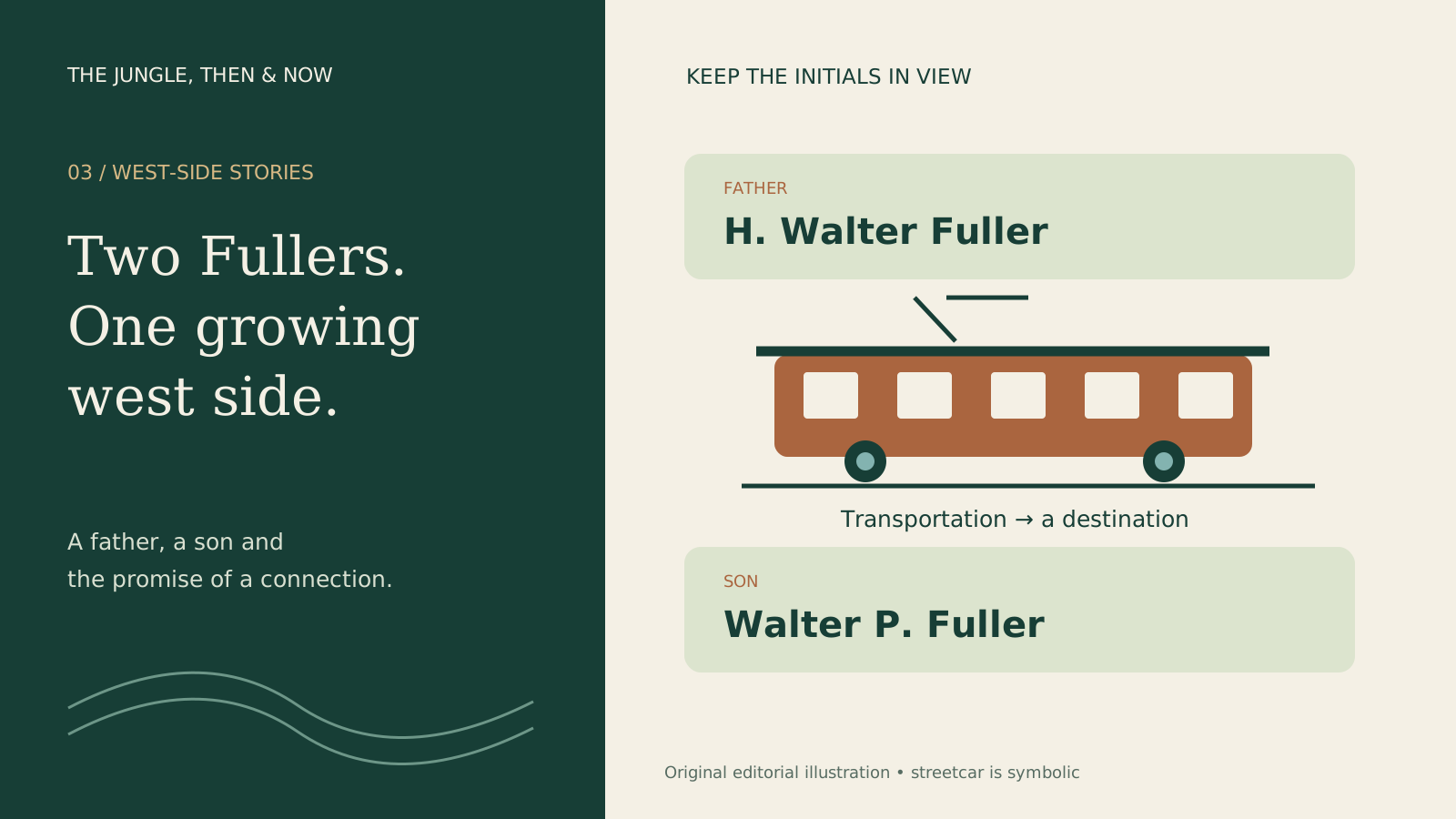
The Fuller name turns up so often in Jungle history that it can sound like the work of one endlessly busy man. There were two: H. Walter Fuller, the father, and Walter P. Fuller, the son.
Keeping the initials straight changes the story. It lets us see two generations working on a related problem: how do you persuade people to travel to the west side, and what do they find when they get there?
Sources: Walter P. Fuller: Jungle Visionary
The father understood connections
H. Walter Fuller’s business world included transportation by water as well as land. The St. Petersburg Museum of History describes his Independent Line joining a 1909 steamship merger with the interests of F. A. Davis. Fuller became president of the combined company.
The museum also credits the Davis–Fuller partnership with trolley extensions that reached the Jungle Prada area by 1913. That connection belonged to a larger citywide network, rather than an isolated little railway built only for the Jungle.
It is easy to admire a vintage streetcar as a charming object. Its larger importance is harder to fit on a postcard. A connection changes the practical meaning of distance: a parcel of land becomes easier to visit, a home easier to consider, an afternoon outing easier to arrange.
For a developer, those possibilities could reinforce one another. Selling the place and making it reachable were closely related jobs. The bay at the end of the journey gave the trip an appealing destination.
Sources: A Merger on the Bay: St. Pete’s 1909 Turning Point · F. A. Davis: Lighting the Way for St. Pete’s Growth
The son built a destination
Walter P. Fuller belongs to the next burst of building. Local historian Stev Strandberg’s research follows the younger Fuller through the Jungle Prado shopping center, the Jungle Country Club Hotel and the airfield projects of the 1920s.
Taken together, the projects make an interesting promise to a would-be resident or winter visitor. Shopping, recreation and transportation could be part of one west-side life. This was an effort to create a destination with enough activity to keep people coming back.
It was also a bet on growth. The history project describes the younger Fuller’s reversals when the Florida land boom faltered. The surviving landmarks can make that period look more inevitable than it was. Ambitious plans still depended on buyers, money and timing.
Sources: Walter P. Fuller: Jungle Visionary
A name beyond real estate
There is another version of Walter P. Fuller in the State Archives: his portrait among members of the 1939 Florida Legislature. It is a useful reminder that the person behind a familiar place name had a life beyond the development brochure.
The fuller picture also leaves room for people who rarely get a park named after them: the workers, operators and residents whose daily activity made a development function. A family’s business decisions are one way into neighborhood history, rather than its entire cast.
Next time you encounter the Fuller name, the initials offer a good place to begin. Then ask the more interesting question: which connection was being made, and what changed because of it?
Sources: Portraits of members of the Florida Legislature, 1939 (PT02083)
GO A LITTLE DEEPER
FOLLOW THE SOURCES.
Original article by The Jungle. Sources checked . Historical interpretation and uncertainty are identified in the text.
- Walter P. Fuller: Jungle Visionary The Jungle Country Club History Project
- A Merger on the Bay: St. Pete’s 1909 Turning Point St. Petersburg Museum of History
- F. A. Davis: Lighting the Way for St. Pete’s Growth St. Petersburg Museum of History
- Portraits of members of the Florida Legislature, 1939 (PT02083) State Archives of Florida / Florida Memory
Have a source, memory or correction to add? Send it to our review inbox. A personal recollection may add perspective without settling a disputed fact.